Recommendations
Hello! Shalom! Aloha! Mabuhay!
If this is your first visit to Modern Apocrypha, I have only two recommendations for continuing on with minimal confusion:
1) Please begin with the first introductory post (found HERE) and work your way forward. Almost all the posts on this blog flow chronologically and will make more sense with the background and context of previous ones. Jumping in anywhere might be disorienting.
2) Please read along in the texts posted off to the right. I try not to summarize too much in the commentary and discussion, and being at least somewhat familiar with what we're discussing or I'm commenting on will be most beneficial and edifying for all involved. Plus, going along with the theme of this blog, any hidden truths to be brought to light will be found within the text itself and not necessarily within my ramblings.
Okay, fine, three recommendations:
3) Please read with an open heart, mind, and spirit. See what truths you can find in these works--ones which speak to you. Namaste : )
If this is your first visit to Modern Apocrypha, I have only two recommendations for continuing on with minimal confusion:
1) Please begin with the first introductory post (found HERE) and work your way forward. Almost all the posts on this blog flow chronologically and will make more sense with the background and context of previous ones. Jumping in anywhere might be disorienting.
2) Please read along in the texts posted off to the right. I try not to summarize too much in the commentary and discussion, and being at least somewhat familiar with what we're discussing or I'm commenting on will be most beneficial and edifying for all involved. Plus, going along with the theme of this blog, any hidden truths to be brought to light will be found within the text itself and not necessarily within my ramblings.
Okay, fine, three recommendations:
3) Please read with an open heart, mind, and spirit. See what truths you can find in these works--ones which speak to you. Namaste : )
Friday, June 3, 2016
ANG AKLATAN - SURAN 7-9 - TEMPLES & TRADITIONS
Before he died, Ngameke also taught Suran a very basic, but standardized, system of measurement based on body parts that is similar to those found worldwide. A "taka" is equivalent to a cubit, or the distance from elbow to fingertips. A "butar" is equivalent to a span, or the width of a hand. The modern standard cubit is 18 in, with a span half of that. There are some differences, however, in how a span is measured, whether from thumb-tip to pinky-tip or simply across the palm, and Suran doesn't specify.
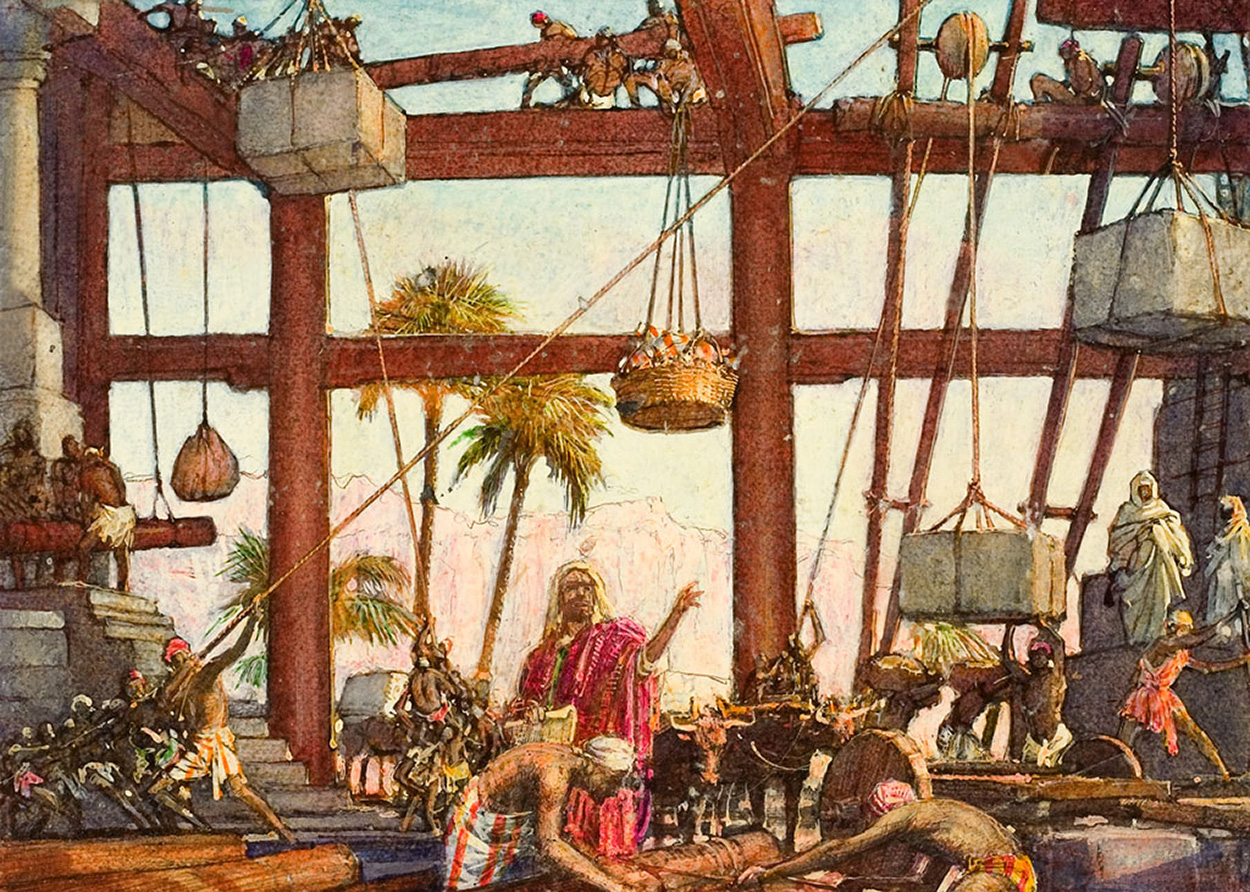
With this system of measurement in place, Suran, his family, and those from their tribe who wish to help begin gathering necessary items to build a temple and associated sacred articles according to the ancient records. They weave and dye cloth (the Old Testament speaks of purple, blue, and scarlet dyes), cut trees for timber, trade for a bunch of gold, etc. It's interesting, though, that Ruman says they're building this temple after that of the Order of Shem/Enoch and not after Solomon's temple. There's no real description anywhere that I could find of a "patriarchal temple".
Ruman notes that Suran's family didn't need to heed every part of the Law of Moses that was given to the children of Israel after coming out of captivity in Kemet (again, Egypt) and preserved through the Levitic line. The descendants of Ophir were not bound by that law, only that which was given to their fathers through Shem, since their ancestors hadn't sinned like the children of Israel. However, because of this distinction, the descendants of Ophir were considered Gentiles to the Levites when they first came together on the islands, which caused much contention.
This is quite an understatement, especially knowing what we do about the Mosaic prohibitions and taboos concerning Gentiles and the later Pharisaic amendments present during Jesus' time. It's amazing these two groups joined together at all. It's also interesting, and a little disheartening, that these Israelites still couldn't let go of their lesser law and traditions even when a greater, purer (and actually probably simpler) system of worshiping Jehovah that preceded their own is right in front of them. Hopefully, we can learn something from this when it comes to letting go of our lesser, more complicated traditions for something greater, purer, and simpler.
After two years, the temple is completed, and Suran takes his sons and son-in-law to purify them to serve as priests in the temple. This is done by cleansing them with water, putting priestly garments on them, and sacrificing a young water buffalo. As per the records, the sacrificial blood is painted on the horns of the altar and poured out by the altar, and the various parts of the sacrifice are burned on the altar. Once this purification ritual is complete, Suran and his sons return to the repository at Mt Genas to retrieve the sacred articles, records, and treasures for safekeeping in the temple.
Thursday, June 2, 2016
ANG AKLATAN - SURAN 6 - JOURNEYS & GIANTS
With Suran learning of his genealogy, Ruman (remember, the final compiler, editor, and sometime narrator) decides this would be a good place to insert Suran's paternal lineage. Working backward, it looks like this:
Suran--Galak--Ngadakasura--Do--Kona-kurem--Lisavia--Netanal--Nabot
--Josu-a--Yosef--David-...-Libni--Gerson--Levi(--Jacob/Israel--Isaac--Abraham)
David, a Levite through Libni, escaped into the wilderness sometime during the First Temple Period, but probably later around the time of the final Babylonian destruction of Jerusalem. The primary piece of evidence pointing to this conclusion is the fact that writings of Isaiah are already included in their Record of the Ancients, so the escape would have to be sometime after Isaiah's ministry. Secondarily, the noble and priestly classes were singled out by the Babylonian conquerors as prime candidates for execution or deportation, so Levites would've been on high alert. There's no detailed account yet published of David's travels, but his group made their way from Israel to the Philippines comparatively quickly, and his son, Yosef, was his firstborn on the islands.
Ruman also mentions that an account of the travels of Shem's descendants is given elsewhere (in the History of the Ophir) but gives a quick synopsis here. Basically, two brothers, Ophir and Havilah, a few generations removed from Shem, leave their homeland (probably somewhere in the Middle East) for a new place of residence and desiring to discover where their distant relatives have been dispersed. They travel many years until they come to the land of Kemet, which is one of the primary names of ancient Egypt in their own language. It literally means "Black Land" due to the black fertile soil of the Nile Valley in contrast to the barren, desert "Red Land" (Deshret) on either side. Here is Kemet depicted in Middle Egyptian hieroglyphs:
km + m + t + city/inhabited land determinative
After spending many years in Egypt, this group makes their way west across northern Africa to the Atlantic Ocean, which they decide to cross (because Morocco wasn't good enough for them or something ; ) And after crossing the Atlantic and coming to another land (America), they wish they would've stayed in Morocco because they're captured, enslaved, and forced to "labor much under the yoke of [a population of] large men." There are a lot of fun Native American traditions and folktales of ancient giants (as there are in pretty much every culture), but there could be a seed of truth here. Also, this fits the Book of Mormon time frame of the Jaredite empire across the Land Northward. Contemporaries of Joseph Smith say the breastplate, which accompanied the interpreters that had been passed down from the brother of Jared, was too large and cumbersome for a 6'2" 200-pound Joseph to wear comfortably.
After many years in captivity, the Lord finally leads them out of the land and across the "great deep" to the west (Pacific) to the islands, which they name after themselves--Lekas, Ofir, Tarsis, Mindan, etc.--like any good explorer or colonizer. (Remember, we discussed the names and significance of these islands in Suran 1, aside from Mindan, which equates to Mindanao.) Over time, they eventually mix with the indigenous inhabitants of the islands.
Again, Ruman mentions that he's only paraphrasing the story here in order to establish the genealogy of Suran, "the father of [his] people". During this incredibly long, multi-generational journey, Ophir's son Seldam is born in the land west of Kemet, Seldam's son Yursal is born in captivity among the large men, and Yursal's son Enos is born on the voyage to the islands. They are all Suran's ancestors as well because Yosef of the Levitic line marries a descendant of Enos of the Semitic line. Their son Josu-a, then, becomes the literal merging of these two lines and two distinct priesthood Orders. Josu-a is the first in the islands authorized to administer the rites of both Orders, and thus Suran also is authorized by lineage to continue administering the requirements of both Laws and Orders as contained in the records he has found. (We'll talk more about the distinction between these two Laws and Orders in Suran 8.)
Wednesday, June 1, 2016
ANG AKLATAN - SURAN 5 - CAVE OF TREASURES
Suran next searches for the other records Ngameke had spoken of which were hidden there at the waterfall and finds many that contain the genealogy of their ancestors and stories of the Lord leading them out of captivity to these islands. (More on that later.)
There is also a mysterious inscription on a piece of bamboo that describes the location of a repository containing many sacred items and great riches. They recognize the location as being far from home, and Suran speaks with his family to see if they should journey to investigate this repository. He confesses to his wife, Tinal, that he really wants to find this repository to "prove" to himself that this is all real and finally put his mind at ease. (Again, this depiction of Suran seems very authentic. Even after all that he's experienced, there's still that sliver of uncertainty that's eating at him.) Tinal faithfully and lovingly supports her husband by testifying that the things he has taught are true and that the Lord will guide them in recovering these sacred artifacts, and she encourages him to do the will of the Lord. What a wonderful example of a faithful, believing woman--and loving, humoring wife. (Though, I think it would've been nice if this turned into a family road trip : )
So Suran and his three sons journey southeast into the mountains and, after many days, come to the foot of the mountain called Genas, as indicated by the inscription. As they are looking around, Ahkman sees a large stone with engravings matching those on the bamboo and begins removing stones from the side of the mountain, revealing a cave. (An echo of Elisha in Visions 2.)
Suran sees this and tells his sons to go gather wood to build a fire so they can see into the cave. They see it goes back farther than the light can reach, so they each take a torch and journey into the cave. (This begins an amazing parable of walking by faith into the dark.) After a while, Kodal's torch is extinguished, but they press forward into the depth of the cave. Soon all their fires go out, and they're left in perfect darkness to ponder which way to go. Kodal sees a faint light shining ahead of them (maybe his eyes adjusted faster than the others' to the darkness), and they make their way toward it. As they reach the light, they realize just how truly bright it is, and that it is coming from a room whose walls are lined with luminescent stones. The light from these stones is brighter than fire, and they are able to see the interior of the cave as if it were day. (Immediately, LDS readers will think of the brother of Jared lighting his group's barges with God-touched stones, but there are also older traditions hinting that Noah's ark was lit by such items, too. It's possible Jared's brother was simply following an earlier pattern.)
The room itself contains a great treasure of gold and silver objects, ancient records, bronze artifacts, and fine swords and weapons that seem to have been there for years and years. Suran instructs his sons to take what they can carry and hurry home so they can construct a temple as described in the records in which to place the relics and treasure and offer sacrifice in the way instructed by the Lord. The sons only take what is needful (noteworthy), seal up the mouth of the cave, and return home.
Now back to the parable of walking by faith. How often is our life, or portions of it, like walking into an unknown cave with only the light of our little fiery sticks to guide us--our previous knowledge, understanding, beliefs, preconceived notions, even whole worldviews and paradigms. In the grand scheme of spiritual things, those possessions of our own creation and experience can only get us so far before their usefulness is extinguished or snuffed out (or even sometimes they become detrimental to progression). When (not if) that happens, we are left alone in complete darkness to ponder our path. The engulfing, overwhelming, claustrophobic blackness of a cave is a perfect metaphor for those times of doubt, despair, emptiness, loss, abandonment, loneliness, betrayal, etc. that we all endure. This dark night seems like a world-shattering crisis while we're in it, but ends up becoming an essential step toward illumination and union with God. Either we can retreat to the comfort of our former life and self, or we can realize and recognize that the end goal--the whole reason we entered the cave in the first place--can only be achieved by laying aside everything we brought with us, giving ourselves over to God, and relying on Him to guide our path. It is within that utter darkness, that wretched state, that we can then see the faint glimmer of God's immense, beautiful, pure, and self-luminescent light in the distance that had been previously upstaged by our small, dancing, flickering, and easily extinguished flame. At the end of that journey into and through the darkness is God's gifts and treasures, whatever they may be--enlightenment, knowledge, love, peace, joy, life, etc.
(What's kinda cool, too, is there's an apocryphal text from the 4th century AD called "The Cave of Treasures" that talks about Adam and Eve living in a special cave after their banishment from Paradise. There are many Jewish and Christian traditions and folklore depicting sacred caves serving as burial places and/or containing records and treasure.)
Subscribe to:
Comments (Atom)


